Professional 3D Printing Models for Prototyping & Manufacturing
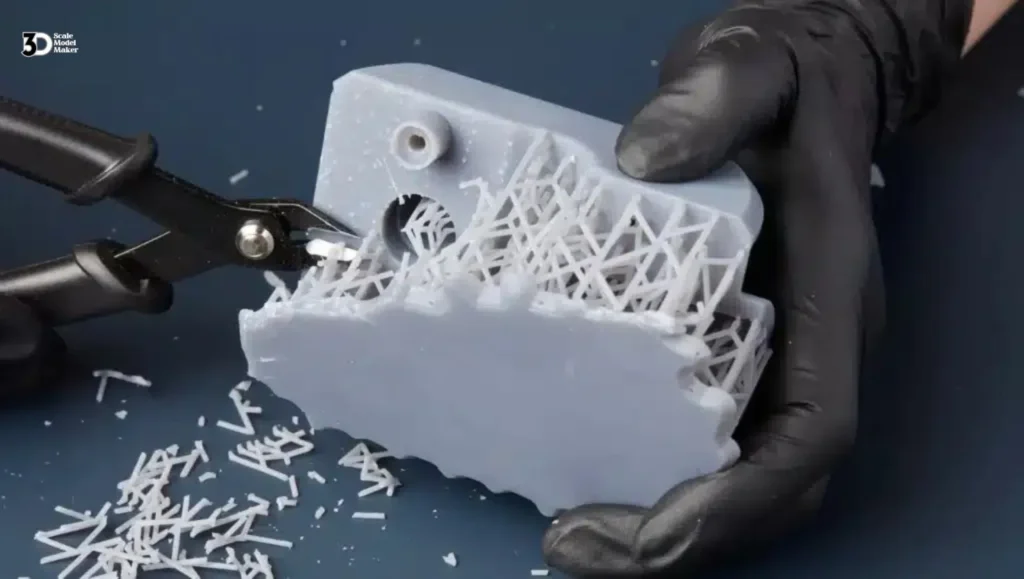
The development in manufacturing is characterized by the pursuit of innovation, experimentation and a desire for efficiency. One of the most revolutionary developments in the last decade is 3D printing. This is a process that has changed the way engineers, designers, and manufacturers think about the process of prototyping as well as production. In the past, it was only limited to sketching out ideas or clay model, prototyping has now become quicker, more precise, and accessible due to the development of professional 3D print models.
A Historical Perspective on Prototyping and Manufacturing
Prototyping has been around as long as human invention itself. Craftsmen from ancient times utilized basic models to conceptualize and improve their designs. For instance, early Egyptians created clay models of architectural tools and other elements to outline the construction of their projects. Similar to the Renaissance and the Renaissance period, inventors like Leonardo da Vinci created intricate mechanical sketches and scale models to better understand the dynamics of their concepts. These early methods highlight the importance of visualizing ideas before investing in production at full scale.
The Industrial Revolution further accelerated this process. Industrialization and the development of factories, as well as standardized components, required more precise prototypes to increase accuracy and avoid mistakes. Engineers first began using wooden and metal models to improve the design of machinery and laid the foundation for the modern prototyping techniques. But these processes were usually lengthy, costly, and required specialist capabilities.
The 20th century’s end brought an important change with the development of additive manufacturing, which is now referred to as 3D printing. The first patent relating to a 3D printing method, called stereolithography, was filed in 1986 by Charles Hull. This technology enabled layer-by-layer design of objects, significantly decreasing the amount of time and money associated with prototyping traditional designs. In the 1990s and into the early 2000s, 3D printing wasn’t restricted to labs for research. It became a vital device for all industries, from healthcare to aerospace.
Modern 3D Printing Models in Prototyping
Presently, the 3D printed models of today are utilized to do more than just visualize concepts. Professionals use the models to evaluate the functionality, ergonomics, and design viability prior to taking the plunge into mass production. One of the main benefits of the professional 3D printing services, such as Maadhu Creatives, is the ability to produce highly precise, precisely constructed prototypes that represent what the product will look like in terms of dimensions as well as mechanical characteristics.
3D printing allows for quick repetition. Engineers are able to make design adjustments and create updated models in days instead of weeks. This is crucial in industries where time to market can be a key indicator of success. For instance, in the automobile industry, engineers are able to quickly create a prototype, check it out to ensure it is durable and fit, and then modify the design to improve performance without having to stop production.
Additionally, the selection of materials that are available to be used in 3D printing has widened substantially. Beyond plastics, 3D printers now make use of resins, metals, and composite materials that replicate real-world conditions. This can be particularly beneficial in medical and aerospace applications, where prototypes need to be able to withstand certain conditions of stress or adhere to strict safety requirements.
Another benefit that comes with the high-end 3D printing is that it is customizable. Traditional manufacturing techniques usually require costly molds and equipment, making small-scale production unproductive. With the help of 3D printers the single prototype or a small amount of manufacturing can be created quickly. This allows entrepreneurs, inventors, and big corporations alike to think of fresh ideas without needing to invest huge amounts of money upfront.
The Role of 3D Printing in Manufacturing
Although prototyping is typically the initial point of entry for 3D printing in the process of developing products The applications of 3D printing in manufacturing are rapidly expanding. The use of additive manufacturing is increasing to produce end-of-use parts as well as spare parts and custom-designed products. The health care industry has utilized 3D printing to create implants and surgical instruments specifically for patients, which has enhanced outcomes and efficiency.
For manufacturers, 3D printing offers several advantages:
- Reduced Waste: As opposed to subtractive manufacturing, which uses the materials from a solid block, 3D printing prints objects layer-by-layer, which decreases the quantity of materials that are used.
- Complex Geometries: Designers have the ability to design intricate structures, internal channels or lattice design that is difficult or costly to create using traditional techniques.
- Flexible Supply Chain: On-demand production decreases the cost of inventory and allows companies to react quickly to market shifts.
- Rapid Product Testing: With functional prototypes on the hands of engineers, they can conduct tests in the real world to identify design flaws and then implement changes efficiently.
Companies like Maadhu Creatives have emerged as reliable partners for manufacturing on a smaller scale, and also prototyping with high-quality 3D printers that are able to combine precision quality, flexibility and precision. By creating a bridge between ideas and actuality they allow designers and inventors to concentrate on creating new ideas instead of manufacturing logistics.
Future Trends in 3D Printing for Prototyping and Manufacturing
Future developments in 3D printing is set to see even more integration into manufacturing processes. Innovations in the field of materials technology, printing speed Multi-material printers are pushing limits of what can be made. Smart materials, which are capable of altering their shape or physical properties in response to stimulus can open new avenues for functional and adaptable prototypes.
Machine learning and artificial intelligence can impact the process of 3D printing. Design optimization based on artificial intelligence could create intricate structures that enhance the strength of a product while decreasing weight, costs and the requirement for the use of materials. These developments indicate that 3D printing isn’t just likely to be a key part of prototyping, but it could change the way manufacturing is conducted.
Furthermore sustainability in manufacturing is being seen as a key aspect. The manufacturing process that uses additives results in less carbon dioxide than other processes and advances in the area of biodegradable and recycled printing materials assist in aligning the manufacturing process with environmental objectives.
Choosing the Right Professional 3D Printing Model
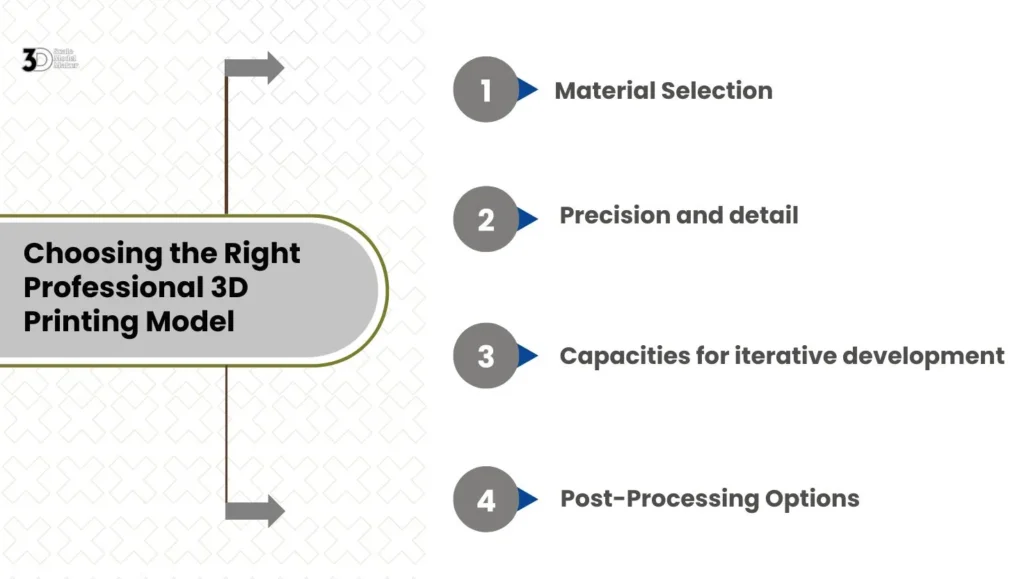
3D printing models to create prototypes or manufacture has a variety of factors:
- Material Selection: Think about the intended purpose to which you intend to utilize the material. Plastic prototypes are cost-effective to conduct tests and fit and tests, whereas prototypes made of composite or metal may be needed for conducting functional tests.
- Precision and detail: Accuracy is crucial particularly when dealing with components that must be connected or interacted with other parts. Professional services such as Maadhu Creatives offer high-resolution printing to ensure an accurate depiction.
- Capacities for iterative development: Software is developed in such a way as to be able to accommodate many different types of iteration and to allow for frequent modification and quick turnaround time.
- Cost Effectiveness: Consider how to focus on the balance of cost versus quality. While 3D printing can lower costs compared to conventional prototyping methods models that have high-detail or features that are specialized may cost more.
- Post-Processing Options: Some models require the application of finishing, painting or some other methods of treatment for the surface. Find out what options are included in the model’s package.
With these considerations By focusing on these factors, manufacturers and designers can benefit from 3D printer models, which can speed up the development process and improve the quality of the product.
Conclusion
From ancient clay models to civilizations to the most recent additive manufacturing of today, the prototyping process is all about transforming ideas into reality. The advancement of 3-D printing has transformed the method, bringing unprecedented speed, accuracy, precision, and the ability to manufacture and prototype. With the help of professional services such as Maadhu Creatives. Engineers and designers can create their unique ideas into reality quickly, efficiently, and with the precision required by the modern industry.
With technology continuing to develop as it does, the importance of 3D printing is set to increase to ensure that innovation is at the forefront of manufacturing and that each new concept can be evaluated and refined before being implemented with confidence.
FAQs:
It varies based on the size and degree of complexity. Basic models are printed in just a few hours, while more detailed models may require a couple of days. Experts such as Maadhu Creatives can help to speed up the process, without sacrificing the quality.
Yes. Today, 3D printing is used not only for prototypes but also for finished parts in industries like medical, automotive, and manufacturing.
The most popular material options are PLA as well as ABS, plastics to create high-quality details, as well as metals such as aluminum and steel for functional and strong parts. Composite and flexible materials are offered based on your requirements.