
Miniature Model Making: Creating Detailed Models That Bring Ideas to Life
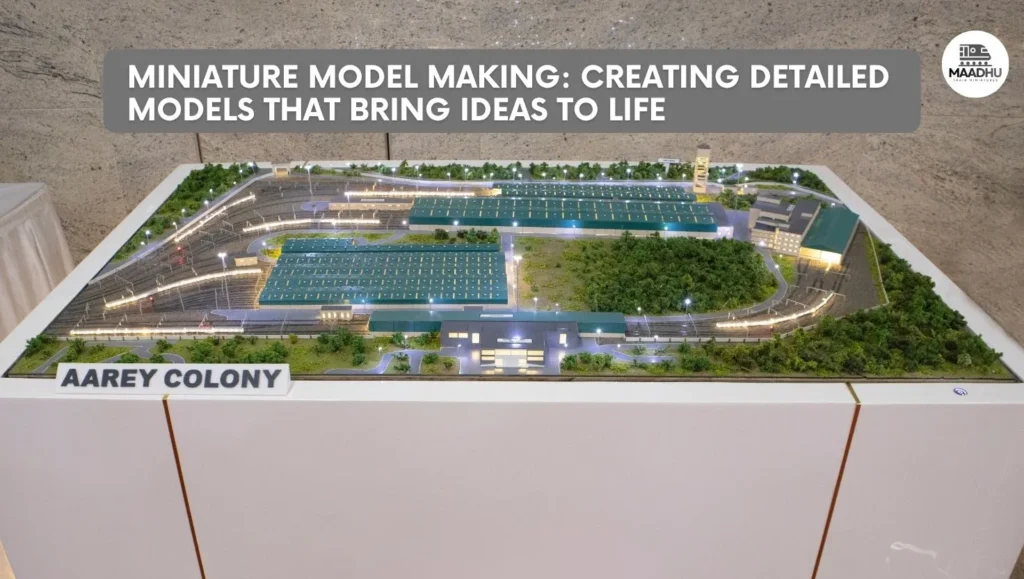
Some ideas are difficult to explain with drawings, numbers, or computer screens alone. When a project needs to be understood visually, a physical miniature model can make a big difference. It gives people the opportunity to see the design, understand its proportions, and explore the relationship between different elements in a simple and practical way.
Miniature models are used across architecture, real estate, engineering, industrial projects, exhibitions, education, and product presentations. Although the finished model may be small in size, creating it requires careful planning, accurate measurements, suitable materials, and attention to even the smallest details.
What Is a Miniature Model?
A miniature model is a smaller physical representation of a real object, building, project, or environment. It follows a selected scale so that the different elements maintain a suitable relationship with one another.
The purpose of a model can vary from project to project. Some are made to explain an early concept, while others are developed with detailed finishes to represent a completed or proposed project as realistically as possible.
For example, an architectural model may show buildings, roads, gardens, windows, entrances, and surrounding spaces. An industrial model may include machinery, equipment, pipelines, tanks, platforms, and other plant components.
Why Use a Miniature Model?
A physical model gives a project something that a flat drawing cannot always provide depth.
People can look at a model from different sides and quickly understand how its components fit together. This can make meetings, presentations, exhibitions, and design discussions much easier.
Some common benefits include:
- Clear visual communication: Complex information becomes easier to understand.
- Better presentations: A physical display can make a project more interesting and engaging.
- Easy design review: Teams can examine layouts, proportions, and relationships between elements.
- Useful for marketing: Real estate and development models can help present a project to prospective buyers and investors.
- Strong exhibition appeal: A detailed model can become an important attraction at a trade show or event.
- Practical project reference: Teams can use the model to discuss specific areas without relying only on drawings.
Different Types of Miniature Models
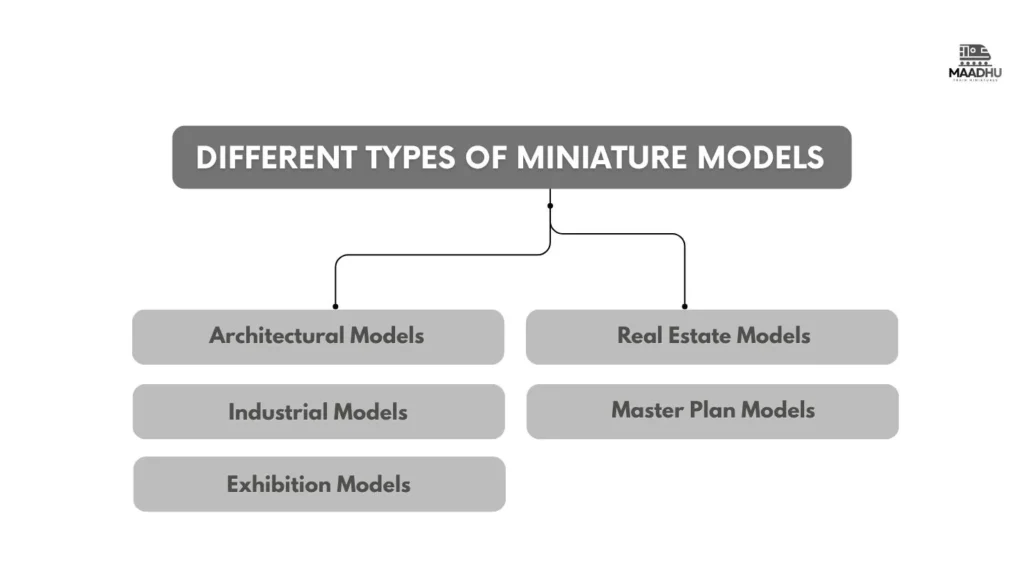
There is no single format for miniature model making. The design changes according to the industry, project requirements, and purpose.
Architectural Models
Architectural models provide a physical view of buildings and developments. They can represent residential projects, commercial buildings, offices, institutions, hotels, and other structures. Details such as facades, windows, entrances, interiors, landscaping, roads, and surrounding buildings can be included according to the required level of detail.
Real Estate Models
Real estate developers often use physical models to present an entire development in one view. Towers, apartments, amenities, gardens, parking areas, pathways, and other features can be displayed together. This allows viewers to understand the overall project instead of looking at individual drawings separately.
Industrial Models
Industrial projects can contain many technical components that are difficult to explain through a single image. A miniature model can bring these components together in a clear physical layout. Factories, production units, processing plants, machinery, storage tanks, pipelines, platforms, and other structures can be represented according to the project requirements.
Master Plan Models
A master plan model focuses on the bigger picture. It can show several buildings, roads, open spaces, landscaping, water bodies, public areas, and infrastructure within one display. These models are particularly useful when the relationship between different parts of a large development needs to be understood.
Exhibition Models
Exhibition models are created with presentation and visibility in mind. Depending on the project, they can include lighting, signage, interactive components, moving parts, and other visual features. Their purpose is not only to explain a project but also to create a display that visitors can easily notice and understand.
How Is a Miniature Model Created?
A quality model does not happen simply by reducing the size of a drawing. Each component needs to be planned and produced carefully.
1. Project Study
The process starts with understanding the available drawings, CAD files, 3D files, dimensions, reference images, and project requirements. The purpose of the model is also considered at this stage.
2. Scale Selection
The right scale is selected based on the size of the original project and the space available for displaying the finished model. The required level of detail also influences this decision.
3. Material Selection
Different parts may require different materials. Acrylic, MDF, foam, wood, plastic, resin, metal, and other materials can be used depending on the design and desired finish.
4. Fabrication
Individual components are produced using suitable techniques. Depending on the project, processes such as laser cutting, CNC work, 3D printing, and manual fabrication may be combined.
5. Detailing
This is where the model begins to take on its final character. Windows, doors, landscaping, furniture, vehicles, machinery, signage, textures, and other small features can be added.
6. Assembly and Finishing
The completed parts are carefully assembled. Painting, surface finishing, lighting, and final detailing are completed before the model goes through a quality check.
Where Can Miniature Models Be Used?
A miniature model can be useful in many professional situations, including:
- Architectural presentations
- Real estate marketing
- Industrial project presentations
- Engineering demonstrations
- Master plan displays
- Corporate exhibitions
- Trade shows
- Educational displays
- Product presentations
- Client meetings
- Project demonstrations
The biggest advantage is that the model gives different audiences a common visual reference. Even people without a technical background can often understand the main idea by simply looking at the physical representation.
What Makes a Good Miniature Model?
Important factors include:
- Correct scale and proportions
- Clean construction
- Suitable materials
- Accurate placement of components
- Good surface finishing
- Appropriate colors and textures
- Strong structural quality
- Clear visibility from different angles
- Proper lighting when required
The model should communicate the project without making the display unnecessarily complicated.
The Value of Professional Model Making
Professional miniature model making combines technical understanding with hands-on craftsmanship. Experienced model makers can work from drawings and digital files while considering practical factors such as scale, material behavior, assembly, transportation, and display requirements.
This becomes especially important for large or highly detailed models where a small error can affect the appearance of the complete presentation.
Modern fabrication methods also allow model makers to create complex shapes and small components with greater precision. When these technologies are combined with manual detailing and finishing, the result can be both accurate and visually appealing.
Final Thoughts
A miniature model gives an idea a physical form. Instead of asking an audience to imagine how different elements will come together, it allows them to see the relationship directly. Whether it is an architectural development, industrial facility, master plan, real estate project, or exhibition display, a carefully created model can make communication more visual and presentations more effective.
With the right scale, materials, fabrication methods, and attention to detail, miniature model making can turn complex project information into something people can see, understand, discuss, and remember.
FAQs:
A miniature model is mainly used to represent a larger object, structure, or project in a smaller physical format. It helps people understand designs, layouts, proportions, and relationships between different elements.
Materials can include acrylic, MDF, foam, wood, plastic, resin, and metal. The choice depends on the model’s size, design, required details, durability, and desired appearance.
Yes. Depending on the project, LED lighting, moving components, interactive features, signage, and other special effects can be incorporated to make the model more informative and engaging.
The scale depends on the original project’s size, available display area, viewing distance, and amount of detail required. A suitable scale should provide enough space for important features while keeping the model practical to display and handle.