Everything You Need to Know About 3D Scale Models
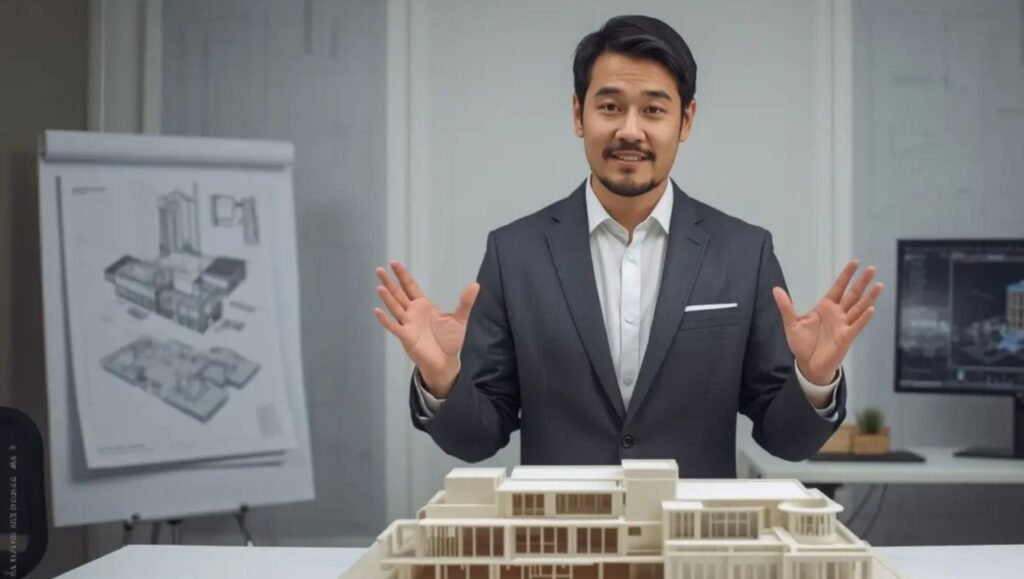
3D Scale Models are a great way to visually convey concepts clearly. Whether you are an architect, engineer, or businessperson, well-made 3D scale models help people visualize complicated designs in a simplified manner. Buildings and factories, Machines and Products, etc., all industries around the world use 3D Scale Models for their business.
What Is a 3D Scale Model?
A 3D Scale Model contains a smaller version of a current Physical Model. It is built in proportion to the Original model with all the corresponding details represented; however, the size is considerably smaller than that of the Original. A scale model can represent buildings, bridges, equipment, factories, vehicles, and complete cities.
A Physical Scale Model gives an individual the ability to feel, investigate, and analyze the Design. A Physical Scale Model provides a clear, realistic view of a project as compared to a Drawing or Computer-Aided design. Creating an actual 3D scale model provides very practical benefits for Architectural, Engineering and Industrial Design and Development Planning.
Difference Between 3D Model and 3D Scale Model
It is not uncommon to mix a 3D model with 3D models that are scaled however, they’re not the same thing.
- A 3D model is typically digital. It is made by a computer using 3D modeling software. It lets designers create and edit concepts digitally.
- A 3D scale model can be described as a tangible, physical object that is created from a digital model. A 3D modeling tool makes the digital model, and an expert scale model maker converts the model into a tangible object that you can touch and see.
In simple terms, it is that an 3D model is the blueprint for the 3D model, while a 3D size model represents the actual model.
Why Are 3D Scale Models Important?
Scale models in 3D have become important for a variety of reasons:
- Easy Understanding: People are able to comprehend complex designs in a short time.
- Better Presentations: Models can make presentations visually appealing and exciting.
- Improved Planning: Engineers and architects can detect mistakes and make adjustments prior to the actual project’s start.
- Marketing Tool: Professionally-designed, high-quality scale models can help draw customers, buyers, and investors.
- Interactive Experience: can look at the model from all angles and experience the design physically.
A professional scale model that is well-designed can be a useful tool for decision-making, communication, and also for marketing.
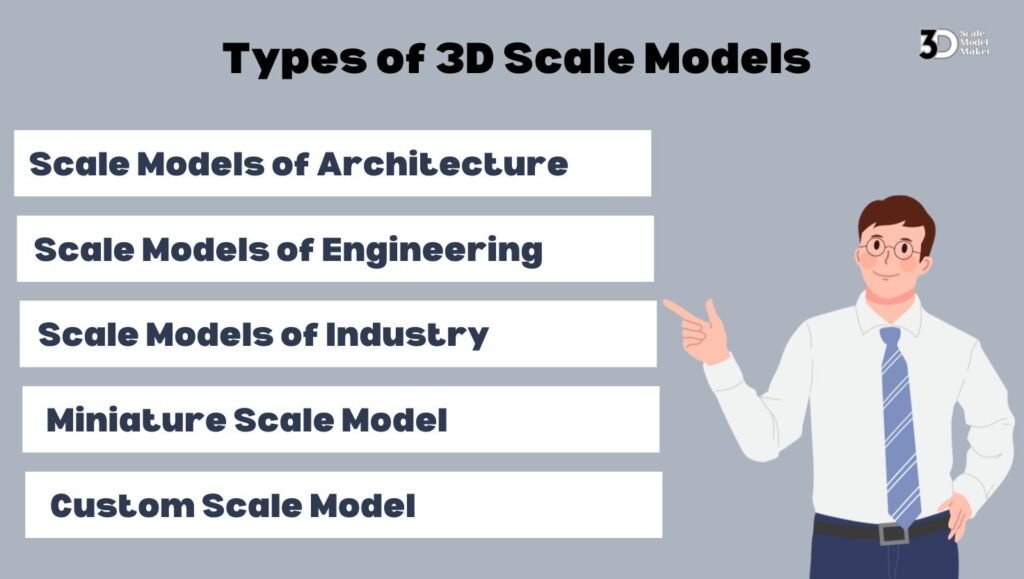
Types of 3D Scale Models
1. Scale Models of Architecture
Architectural models represent buildings, apartments, offices, and entire sets of towns. The use of scale models has become common in real estate, urban planning, and the construction industries. As a result of the model-making process, it is easy for a client to see how their desired layout will function and the design of each component (e.g., windows, roads, etc.), without having any technical background in the industry.
2. Scale Models of Engineering
An engineering scale model shows how technical systems work together (e.g., bridges, factories, power plants, and other infrastructure projects). Engineering models allow potential investors and clients to visualize the various components of a project and how they will interact. The many uses of engineering models include: testing the design of the proposed system before it is built, and determining if the design is functional and if the design will be cost-effective.
3. Scale Models of Industry
Industrial scale models are an example of a scale model that can represent factories, machines, production plants, and industrial layouts. Industrial scale models are helpful in many areas, such as defining production workflows, training employees, and displaying layouts at exhibitions. These types of models are also helpful to those who are not able to visit an actual production facility.
4. Miniature Scale Model
Miniature scale models are small in physical size but very detailed. Miniature scale models are typically found in museum exhibits, trade show displays, and in private collections. Miniature scale models are valued for their high degree of precision, skilled craftsmanship, and realistic appearance. Miniature models can serve as a means of teaching and learning for both students and non-students. The teacher/instructor is able to present a larger project, while the student is able to view and examine a small representation of the project.
5. Custom Scale Model
A personalized scale model is created in accordance with your specifications. Choose the size, material, color, lighting, and interactive components that you desire.
Personalized scale models are typically used for marketing, exhibition, and investor presentations. Personalized scale models will enhance the professionalism and originality of your project.
How Scale Model Making Works
The procedure of creating scale models is an intricate process that translates concepts into tangible outputs. The following is a simplified sequential approach:
- 3D Model Design: the digital three-dimensional (3D) model created by a 3D model maker (designer).
- Choosing the Scale: the decision will be made regarding what scale (size) to use to represent the model based on how it relates to the actual item.
- Material Selection: Based on what type of model it is, you will need to select what material (wood, plastic, metal, foam, acrylic, etc.) will be used to construct the model.
- Construction: the model will be created (constructed) by skilled craftsmen and a scale model maker.
- Adding Details: paint, texture, lighting, and other fine details will be added to provide realism to the final project.
Using a professionally trained model maker will help to ensure that the scale model is built to a high-quality level with the most accurate and durable level possible.
Who Needs Model Making Services?
Some of the industries and professions that utilize model-making services:
- Architect’s & Builders: for client presentation of building designs.
- Real-estate developers: to showcase apartments/houses/township projects.
- Engineering: to design and test products.
- Industrial Companies: to demonstrate factory layout and machinery.
- Educational Institutions: to educate students about structures and engineering.
Employing Professional Model-Making Services provides time savings, accuracy, and the ability to effectively communicate your design to clients or prospective investors.
Benefits of Hiring a Professional Scale Model Maker
There are many benefits associated with working with a Professional Model Maker:
- High-Quality Finishing: The model makers have the necessary skills to create models that have a polished, finished product and will create models that represent, as accurately as possible, the actual product visually.
- Accurate Scale and Design: Every detail of the model will be designed and constructed accurately.
- Customization: Models can be designed and built to your specifications.
- Strong Visual Impact: Model presentations/exhibits /marketing campaigns are more effective with the inclusion of models.
A high-quality and professionally created 3D scale model will be beneficial in attracting potential investors/buyers/clients and will lead to quicker success of your project.
Tips for Choosing the Right Model Making Services

There are many considerations to keep in mind when selecting a professional model manufacturing organization or scale model manufacturer. Some of these that should be evaluated include:
- Experience: Evidence of a significant prior work history creating Architectural, Industrial, and Engineering models to scale is strong evidence of the Manufacturer’s ability.
- Quality: All Model Manufacturers should utilize quality materials and include quality finishing and exceptional detail in their manufacturing process.
- Customization Options: Be certain that the Model Manufacturer has the capability to manufacture a Custom Scale Model according to client specifications.
- Communication: Select a Model Manufacturer that fully understands the purpose of your project and has an established communication method to update the client throughout the process.
- Delivery Time: Be sure to establish a time frame in which the Model Manufacturer can complete the project and provide you with the Scale Model.
Following these suggestions will enable you to maximize the return on investment you receive from your investment in a 3D Scale Model.
Final Thoughts
While the 3D Scale Model is designed to be a replica of a small object, it serves a larger function than just being a miniature. A professional scale model will add a communication method to your Architecture, Industrial, or Custom Scale Models and provide value to all three types.
By utilizing the services of a Scale Model Manufacturer using both contemporary design practices for 3D Scale Models and professionally produced models, businesses can deliver clear and concise descriptions of their ideas, easily obtain capital from investors, and base sound business decisions on the information provided in the Scale Model. By choosing a Professional Model Manufacturer, your project will stand out due to the level of accuracy, quality of work, and Visual Impact provided in the Finished Product.
FAQs About 3D Scale Models
There are several types of materials, including wood, plastic, metal, foams, and acrylics. Depending on the project, the material selected will be based on the type and intended use of the model.
Yes, a large-scale project, such as a city plan or industrial facility, is just as easily created as a small-scale model.
The amount of time required to create a model is dependent upon the model’s size and complexity, as well as the amount of detail incorporated into the model. Smaller models may take a few days to create, while larger, custom-designed professional models will take several weeks or longer.